
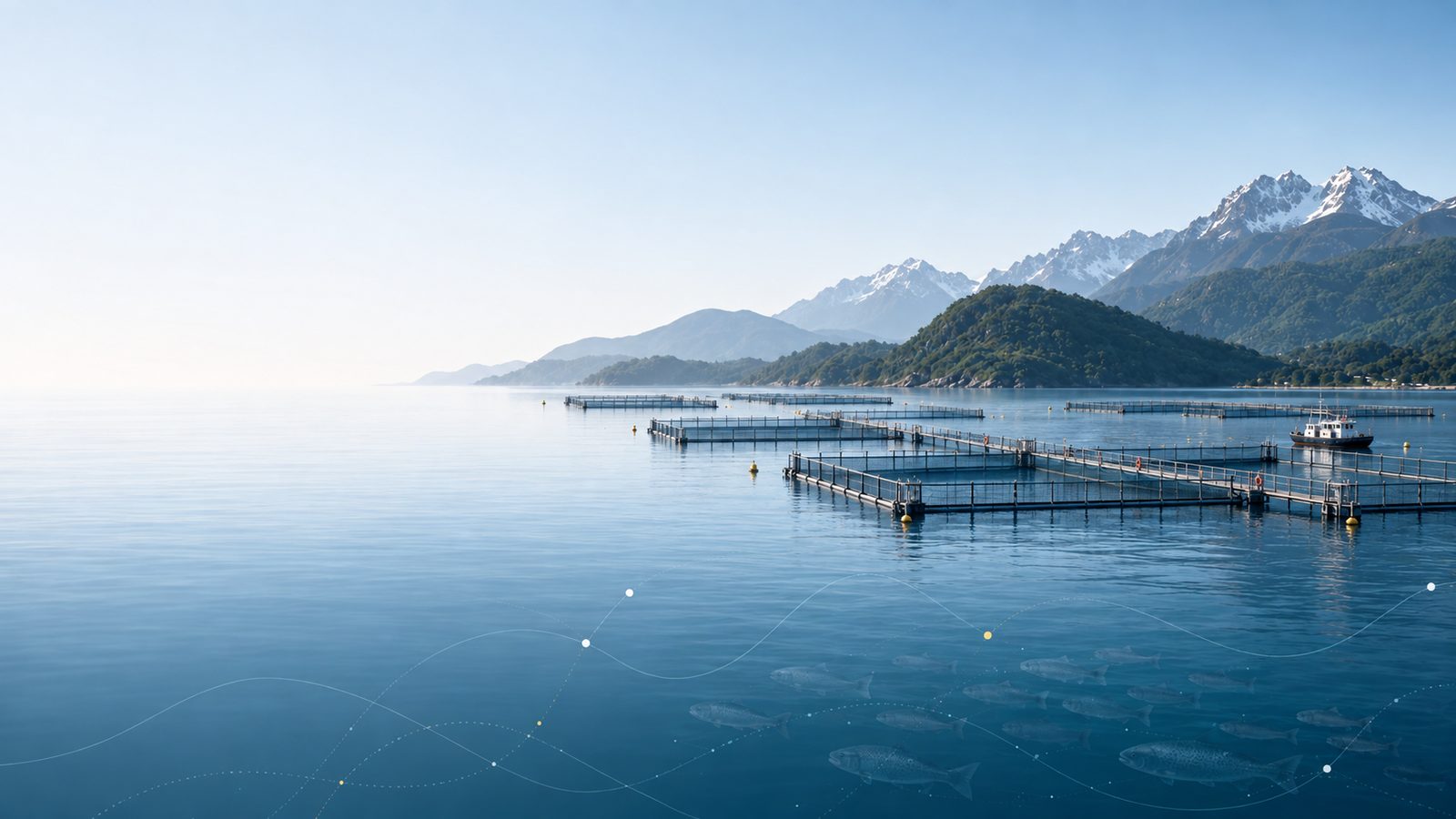
Salmon farming in Chile
Challenges
Salmon farming faces fish health, environmental, climate and social challenges that are part of the current debate about its future.
An industry that keeps evolving
Chilean salmon farming has undergone a major transformation since it began. However, like other productive activities, it keeps facing new challenges that call for ongoing adaptation, learning and innovation.
These challenges arise from environmental change, new regulatory requirements, scientific advances, shifts in international markets and society's growing expectations about how food is produced.
In this context, the future of salmon farming will depend on its ability to keep incorporating knowledge, strengthen collaboration among the different players and develop solutions that reconcile production growth with environmental and social sustainability.
Sustainability: a cross-cutting challenge
One of the main challenges identified in the research is moving toward increasingly sustainable and efficient salmon farming. Sustainability means developing the activity with a balanced view of its environmental, social and economic reach. In practice, that means producing food efficiently while protecting the natural environment, promoting community well-being and strengthening the sector's competitiveness.
More than a one-time goal, sustainability is a process of continuous improvement that guides many of the decisions and innovations the industry develops.
Strengthening fish health and welfare
Fish health remains one of the main areas of work for salmon farming.
Scientific research, ongoing monitoring and new fish health strategies aim to prevent disease, strengthen fish welfare and reduce the risks associated with production.
In this area, collaboration among companies, research centers, universities and public agencies is essential to generate new knowledge and develop increasingly effective solutions.
Adapting to climate change and environmental conditions
Shifts in environmental conditions are one of the major challenges for the future development of salmon farming.
Climate change, ecosystem variability and the need to better understand how the marine environment works are driving research to strengthen the industry's capacity to adapt.
Increasingly reliable scientific information and monitoring systems will make it possible to anticipate change and make timely decisions in new scenarios.
Innovating to keep moving forward
Innovation will continue to play a key role in the development of salmon farming.
Beyond adopting new technologies, the challenge is to strengthen the sector's ability to generate knowledge, transfer it to production and turn it into solutions for fish health, environmental, production and social challenges.
In this process, collaboration among the different players in the innovation ecosystem will remain one of the main drivers of the industry's development.
The challenge of building trust
Keeping an ongoing dialogue between salmon farming and society: transparency, access to information based on scientific evidence and communication of the progress made are important for building trust and fostering a better understanding of what the activity contributes.
Looking ahead
The history of salmon farming shows that its development has been shaped by its ability to adapt to new scenarios and keep incorporating knowledge.
Today's challenges are also opportunities to keep strengthening research, innovation, sustainability and collaboration among the sector's players.
In this process, scientific knowledge, human capital development and technology transfer will remain key tools for building salmon farming that is ready to meet future needs.