
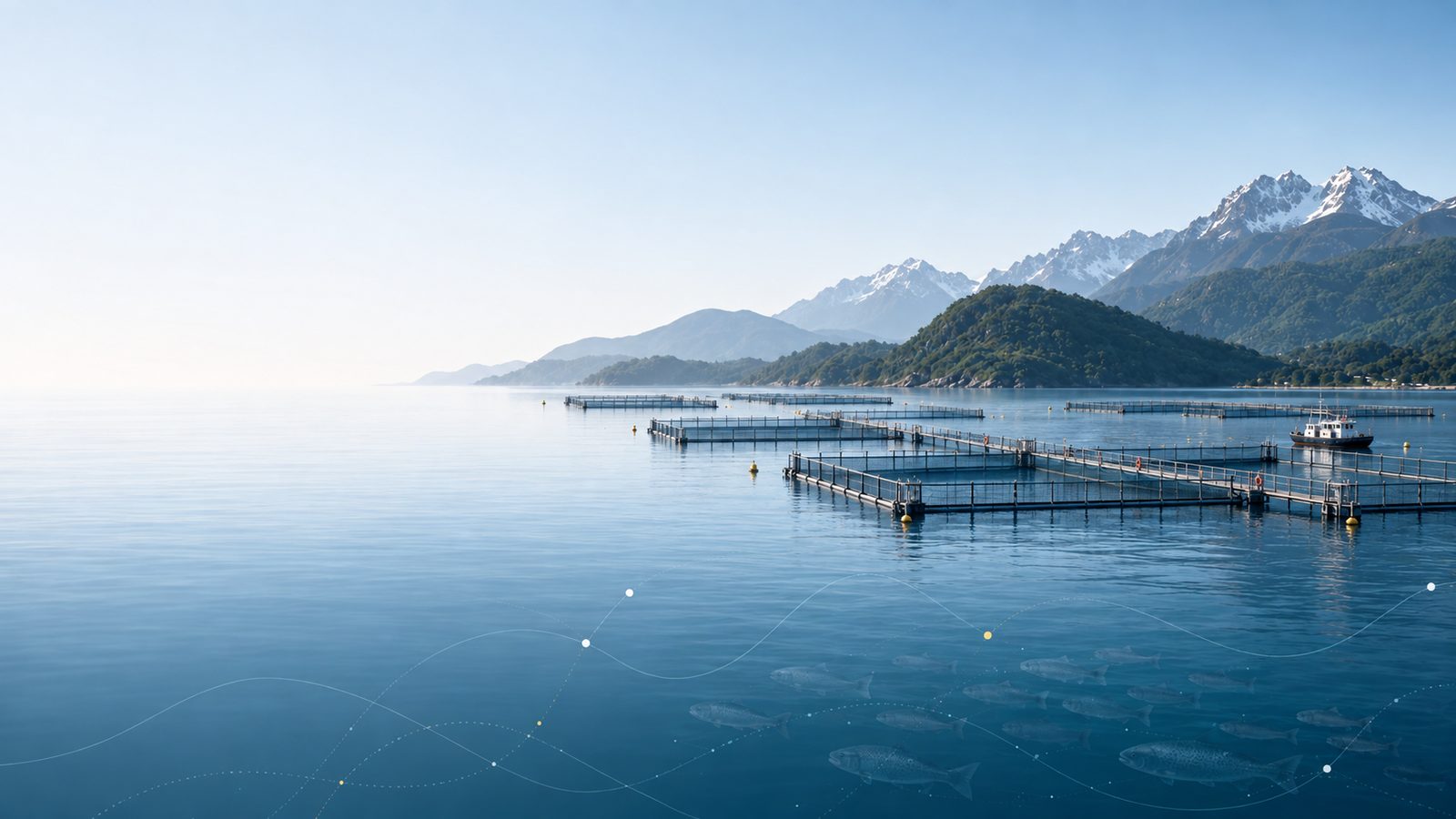
Global salmon farming
Feed and efficiency
Farmed salmon convert feed into protein more efficiently than many land-based animal species.
Feed: a pillar of salmon farming
Feed is one of the most important components of modern salmon farming. It influences not only fish growth, but also fish health, welfare, production efficiency and environmental performance. Feed also accounts for around 50% of the total production cost per kg of salmon.
Unlike wild salmon, which get their food by hunting small fish, crustaceans and other aquatic organisms, farmed salmon receive diets formulated specifically to meet their nutritional requirements at each stage of development.
What do farmed salmon eat?
Salmon farming feeds are manufactured industrially as extruded pellets. Each diet contains a precise combination of nutrients that supports healthy growth and meets the fish's needs during the different stages of farming.
Their main components include:
- proteins;
- lipids or fats;
- carbohydrates;
- vitamins;
- minerals;
- carotenoids (pigments with antioxidant properties);
- other essential nutrients.
The formulation of these feeds changes as the fish grow, adapting to their nutritional and physiological requirements.
Feed that has evolved
For much of salmon farming's history, diets relied mainly on marine ingredients, especially fishmeal and fish oil.
However, the growth of aquaculture drove the search for alternatives that would reduce pressure on these resources and secure greater availability of raw materials for the future.
As a result, a large share of the proteins and oils used in salmon feed now comes from plant-based ingredients, such as:
- soy;
- wheat;
- canola;
- corn;
- other processed agricultural raw materials.
This diversification has reduced dependence on marine ingredients while still meeting the fish's nutritional requirements.
Innovation in nutrition
Research in aquaculture nutrition continues to develop new raw materials to make production more efficient and sustainable.
Alternatives now being adopted include:
- insect meals;
- proteins obtained through fermentation;
- yeasts;
- bacteria;
- microalgae;
- microcrustaceans;
- oils derived from marine algae.
These new sources aim to reduce the use of traditional resources and improve the sustainability of production, while maintaining the nutritional quality of the feed.
Microalgae, like krill, for example, have drawn particular interest because they naturally produce omega-3 fatty acids, nutrients that matter both for fish health and for the nutritional value of salmon for human consumption.
Feed and efficiency
Feed efficiency is one of the most important aspects of modern salmon farming.
A properly formulated diet helps:
- support growth;
- strengthen immune response;
- improve fish welfare;
- reduce feed losses;
- make better use of raw materials.
In addition, modern automated feeding systems make it possible to deliver the right amount of feed, reduce waste and monitor fish feeding behavior in real time.
A sustainability challenge
Feed is also one of the main environmental challenges of salmon farming.
Ingredient production and diet formulation influence the use of natural resources and the environmental footprint of farming. That is why companies, research centers and feed manufacturers work continuously to develop more sustainable raw materials and improve feed efficiency.
Today, the evolution of salmon feed reflects the industry's effort to balance productivity, animal health, nutritional quality and environmental sustainability.